• Log In

EPSC Szczecin Airport

for Microsoft Flight Simulator
MSFS 2024 Compatible

Solidarity Szczecin-Goleniow Airport (IATA: SZZ, ICAO: EPSC) is a regional international airport serving Szczecin and the wider West Pomeranian region in north-western Poland. The airport is located near Goleniów, approximately 45 km north-east of Szczecin city centre, in an area shaped by relatively low urban density, proximity to the Baltic coast, and strong cross-border links with Germany. Its location places it within reach of both Polish and German catchment areas, giving it a distinctive transnational role and steady demand for regular, seasonal, and charter air services.

Szczecin itself is one of Poland's largest port cities and an important economic and cultural centre of the region. Located on the Oder River near the Szczecin Lagoon and the Baltic Sea, the city has a long maritime tradition and serves as a key hub for shipping, logistics, and industry. Its urban layout is known for wide boulevards, green spaces, and a radial street pattern inspired by 19th-century European planning concepts, giving it a distinct architectural identity. Szczecin also functions as an academic and administrative centre, while its proximity to Germany, particularly Berlin, creates strong cross-border economic links and further increases the strategic role of the airport.

The origins of the airport are closely tied to military aviation. The airfield at Goleniów was constructed during the Second World War, in the early 1940s, under German administration. It was developed as a military installation featuring a concrete runway and technical infrastructure designed for operational durability and strategic use rather than civilian transport. Following the end of the war in 1945, the airfield was taken over by Polish authorities and incorporated into the structure of the Polish Air Force, continuing for decades as a military base supporting transport, training, and logistical operations.

Civilian aviation activity began to emerge gradually in the post-war period, but the airport's transformation into a regional passenger facility gained real momentum only after the political and economic changes of the early 1990s. In 1993, Szczecin-Goleniow Airport was formally opened to regular international civilian traffic, marking the beginning of its modern role within Poland's civil aviation system. Early operations were modest, relying on adapted infrastructure and relatively simple passenger facilities, but they established the foundation for future growth.

Throughout the 1990s and 2000s, the airport developed steadily. Passenger traffic increased as regional mobility improved and economic integration with Western Europe accelerated. The expansion of low-cost carriers and seasonal charter services strengthened the airport's role within the regional aviation network, while infrastructure upgrades improved operational standards, passenger handling, and overall functionality. A major milestone was the opening of a new passenger terminal in 2010, which significantly improved comfort, capacity, and operational efficiency.

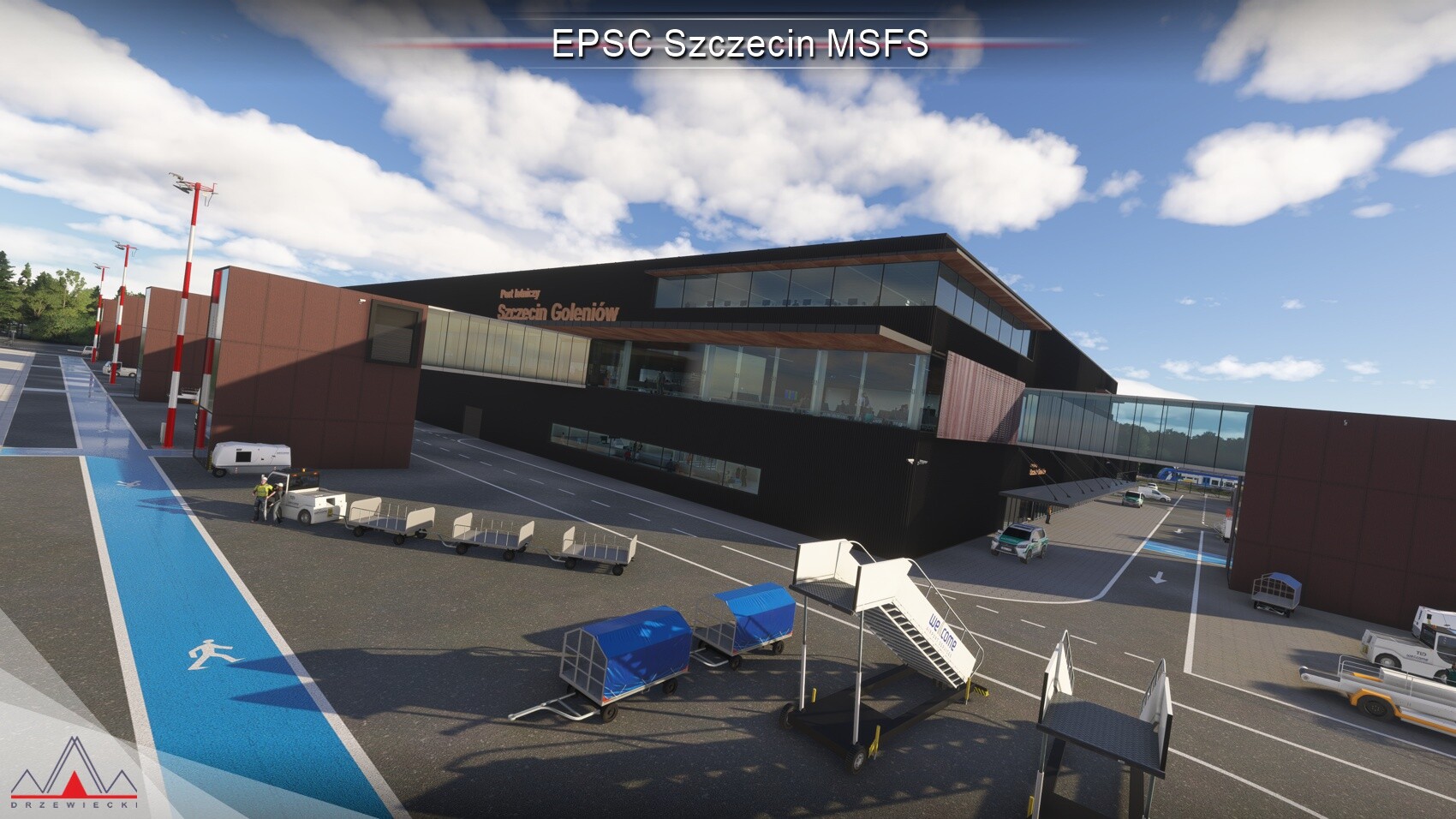
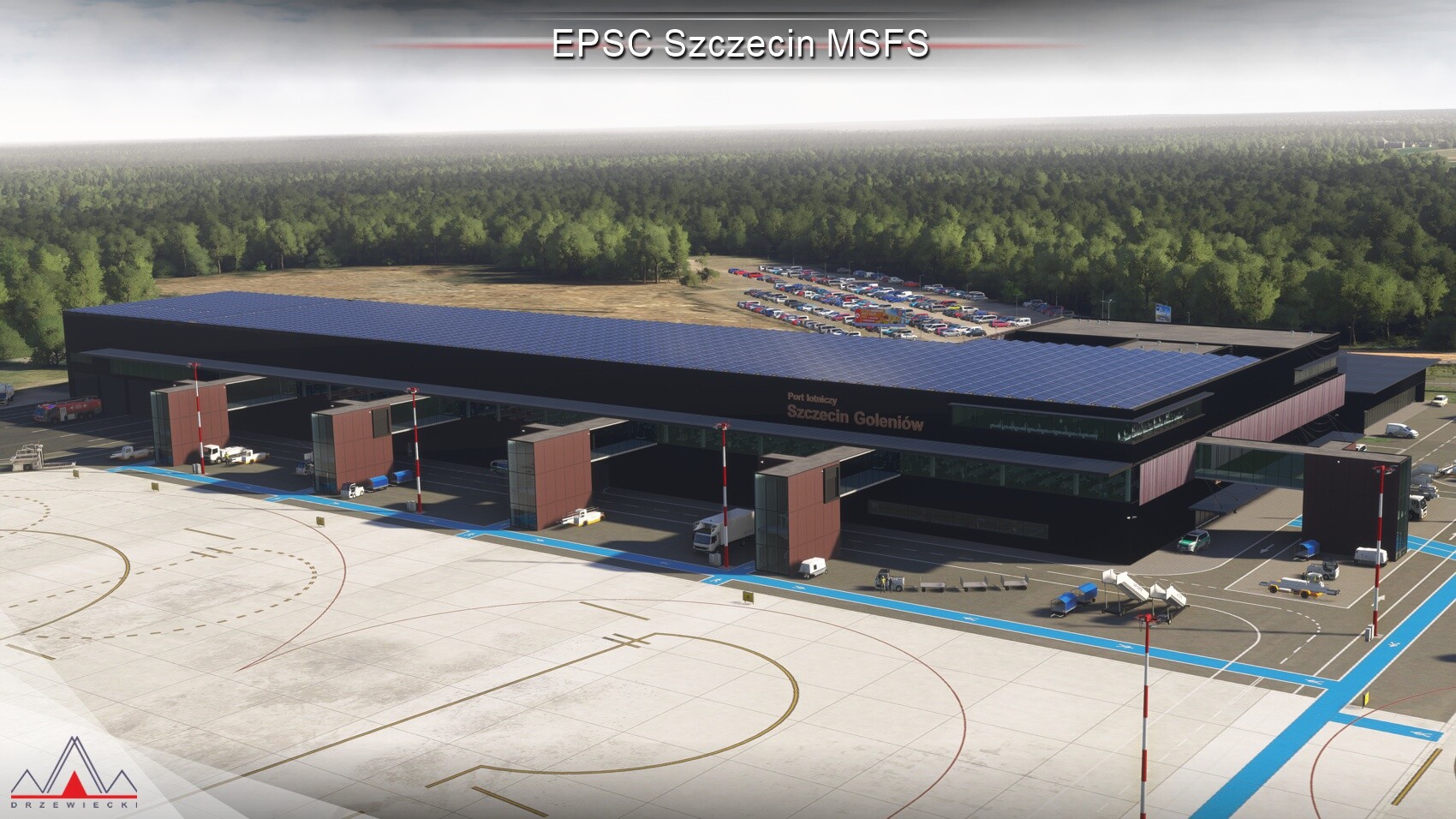
In recent years, the airport has entered another major development phase. The most significant ongoing investment is the construction of a completely new passenger terminal, designed to replace the existing facility and substantially increase capacity. Planned to open in 2027, the new terminal represents a major step forward in the airport's long-term development and will redefine the public face of EPSC for the coming decades.

Today, EPSC remains a compact but strategically important airport for north-western Poland, balancing regional connectivity with operational efficiency. It serves as the primary aviation gateway for Szczecin's metropolitan area and supports the region's economy, tourism, and international accessibility through a steadily modernised airport platform.

Key Features

  • Accurate airport representation - detailed EPSC layout with aprons, taxiways, stands, and infrastructure, fully compatible with AI traffic and ATC
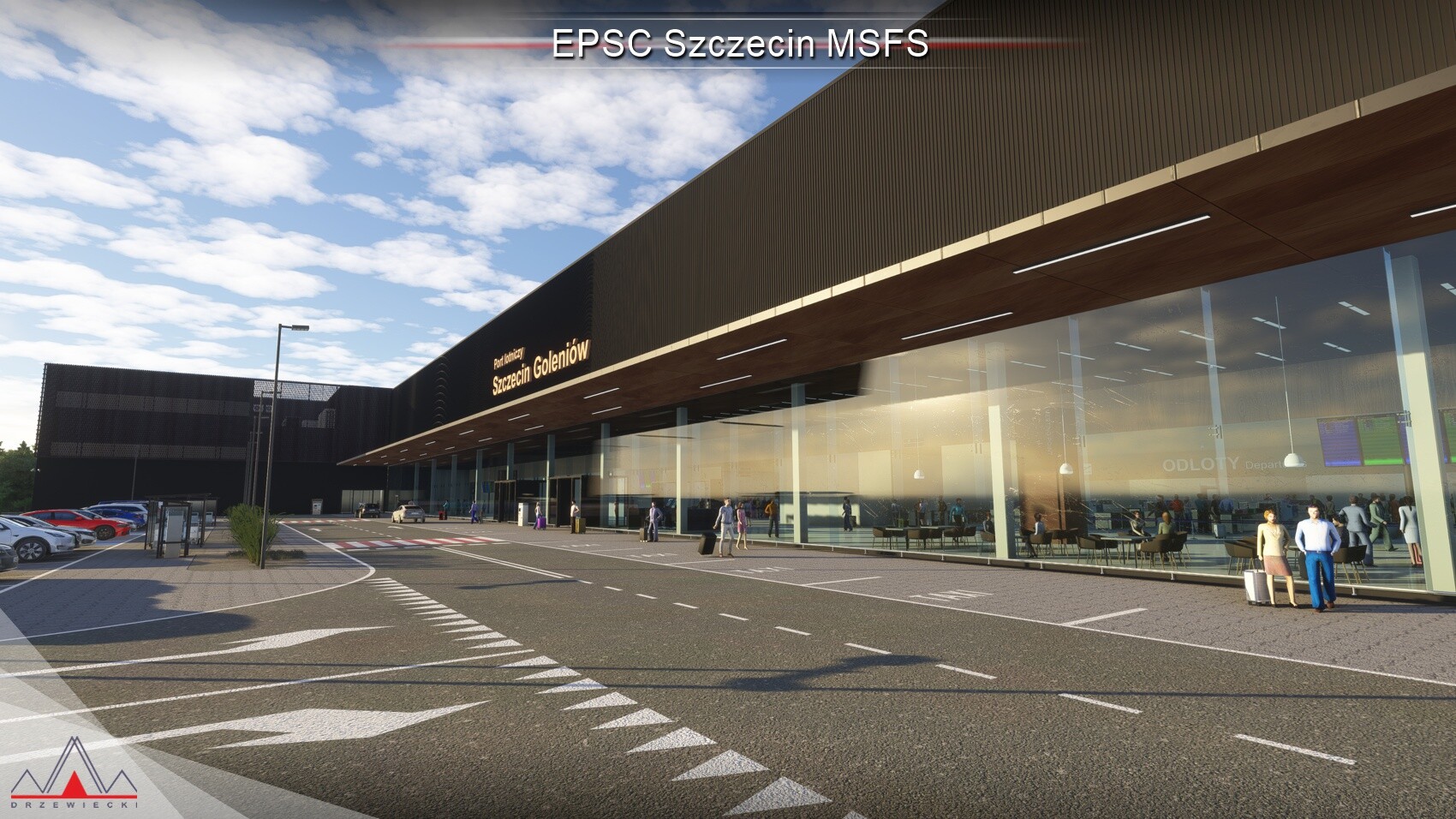
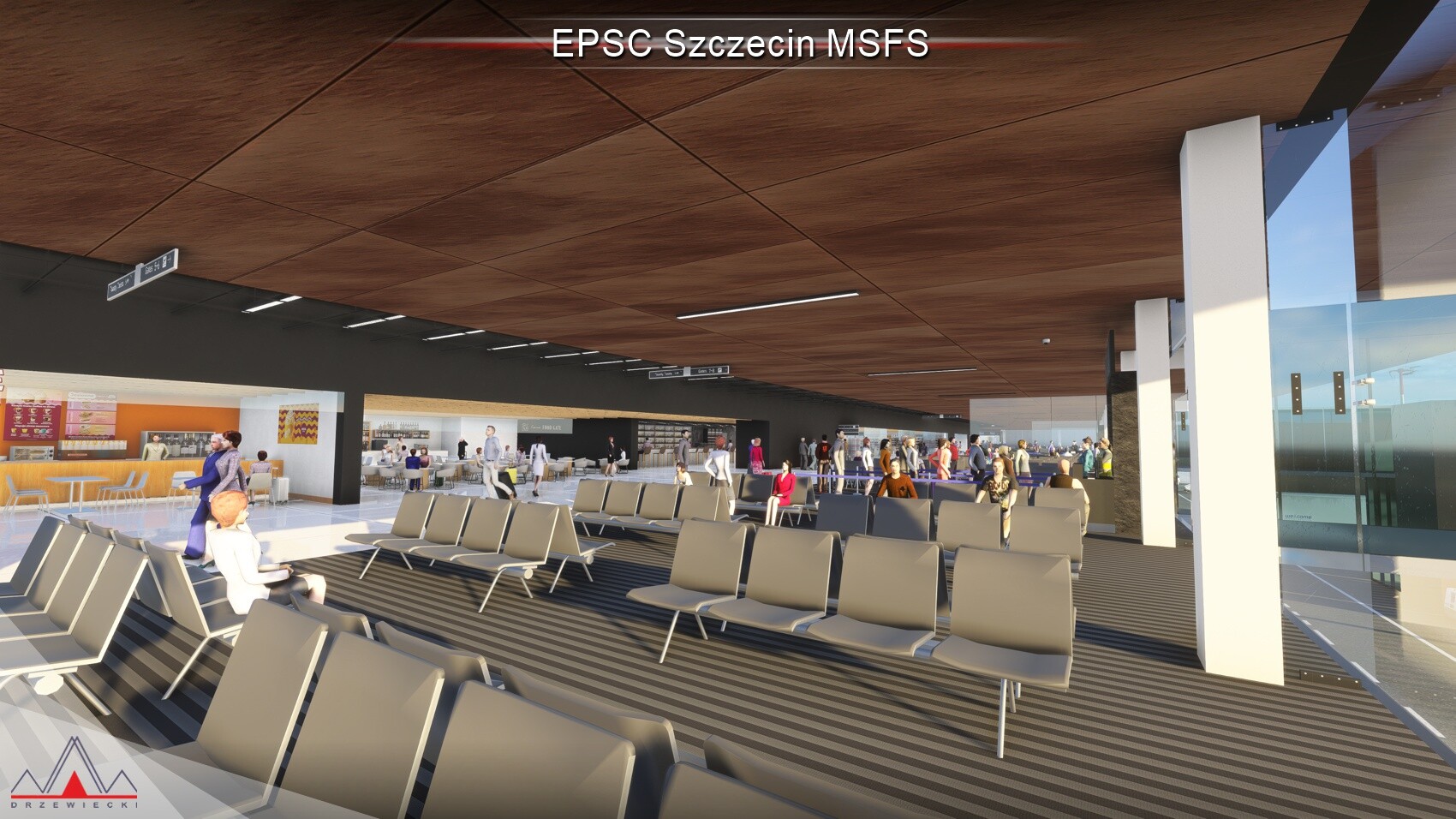
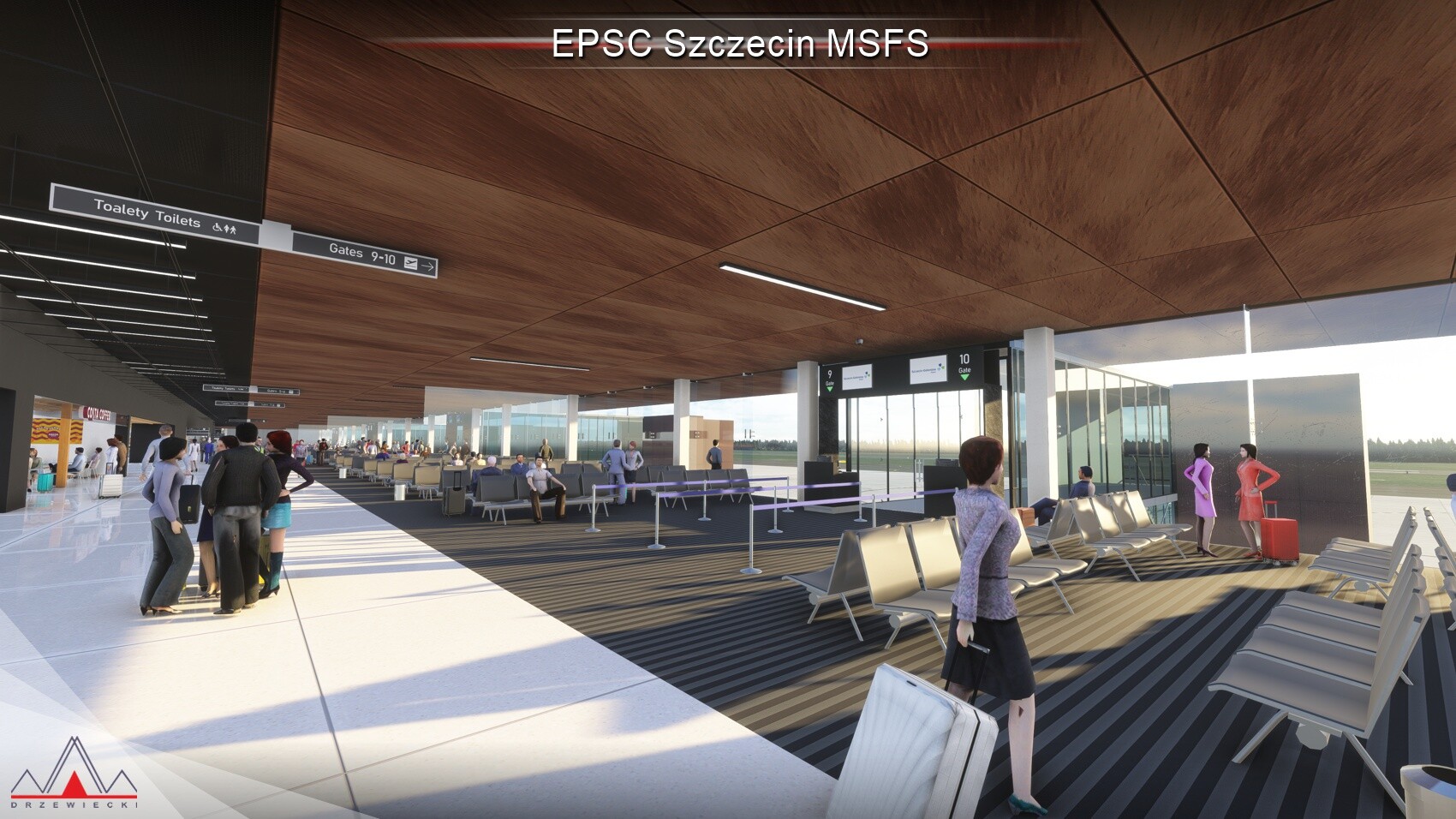
  • New terminal included - 2027 terminal developed based on architectural plans and official visualizations
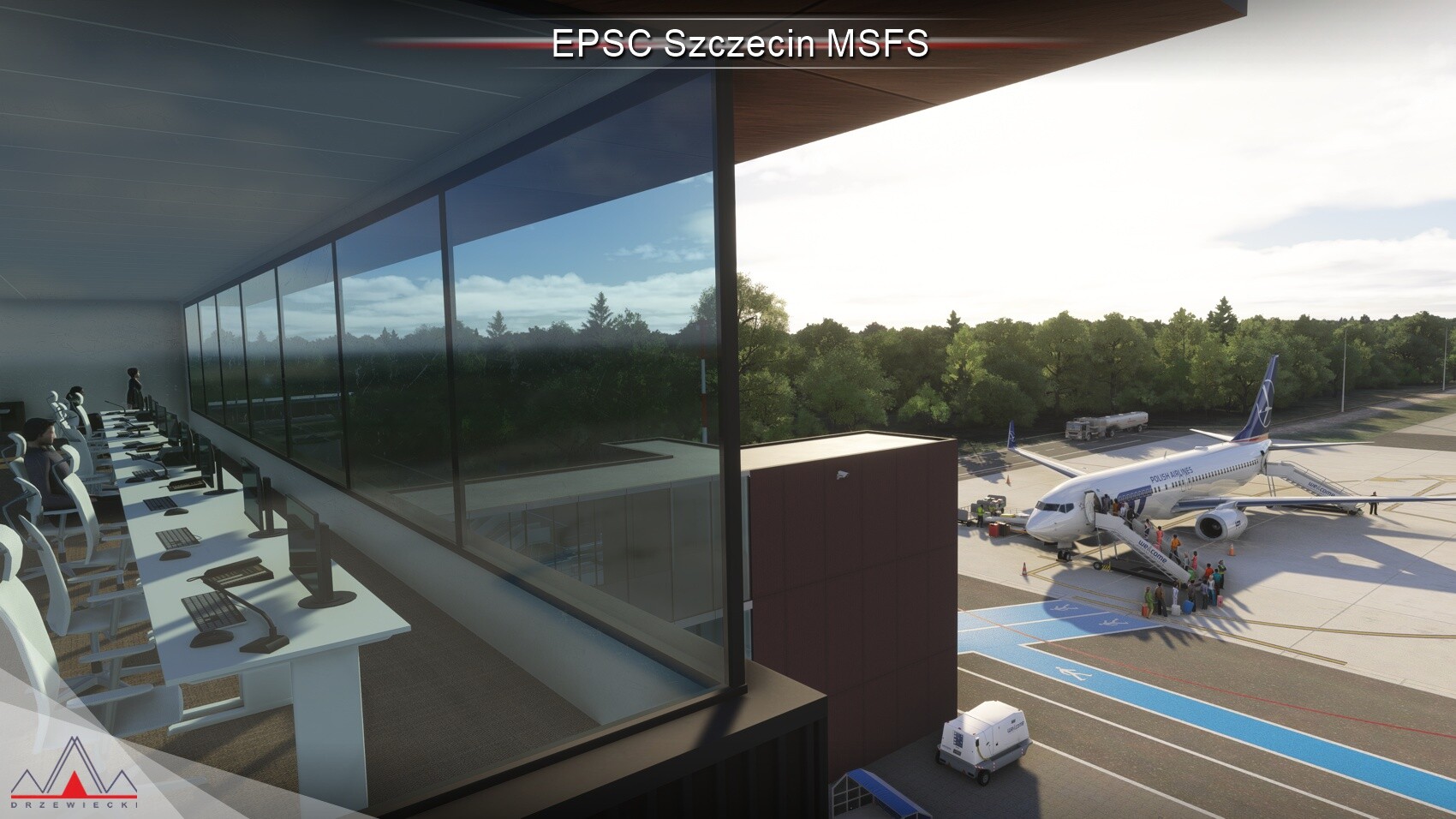
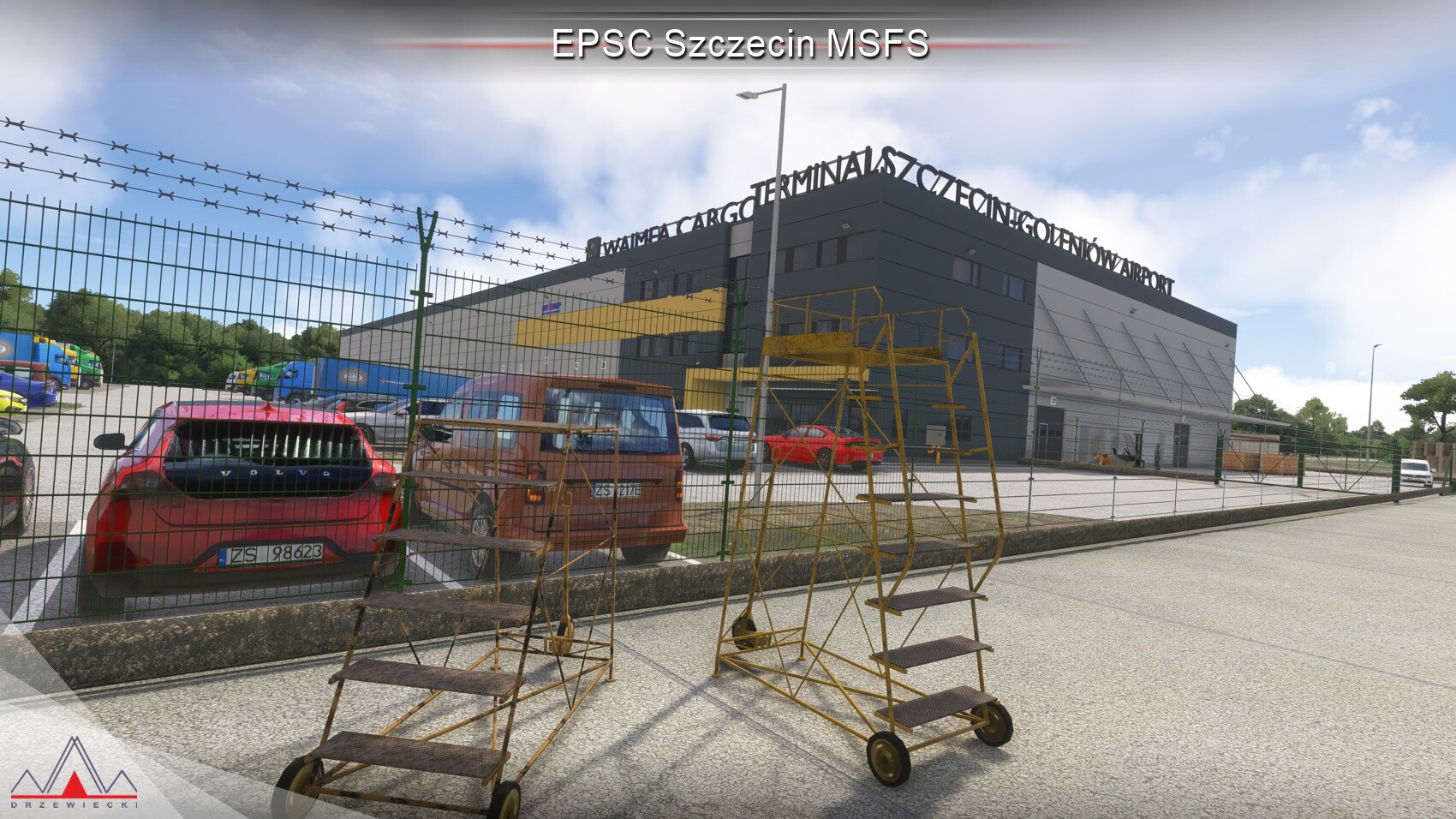
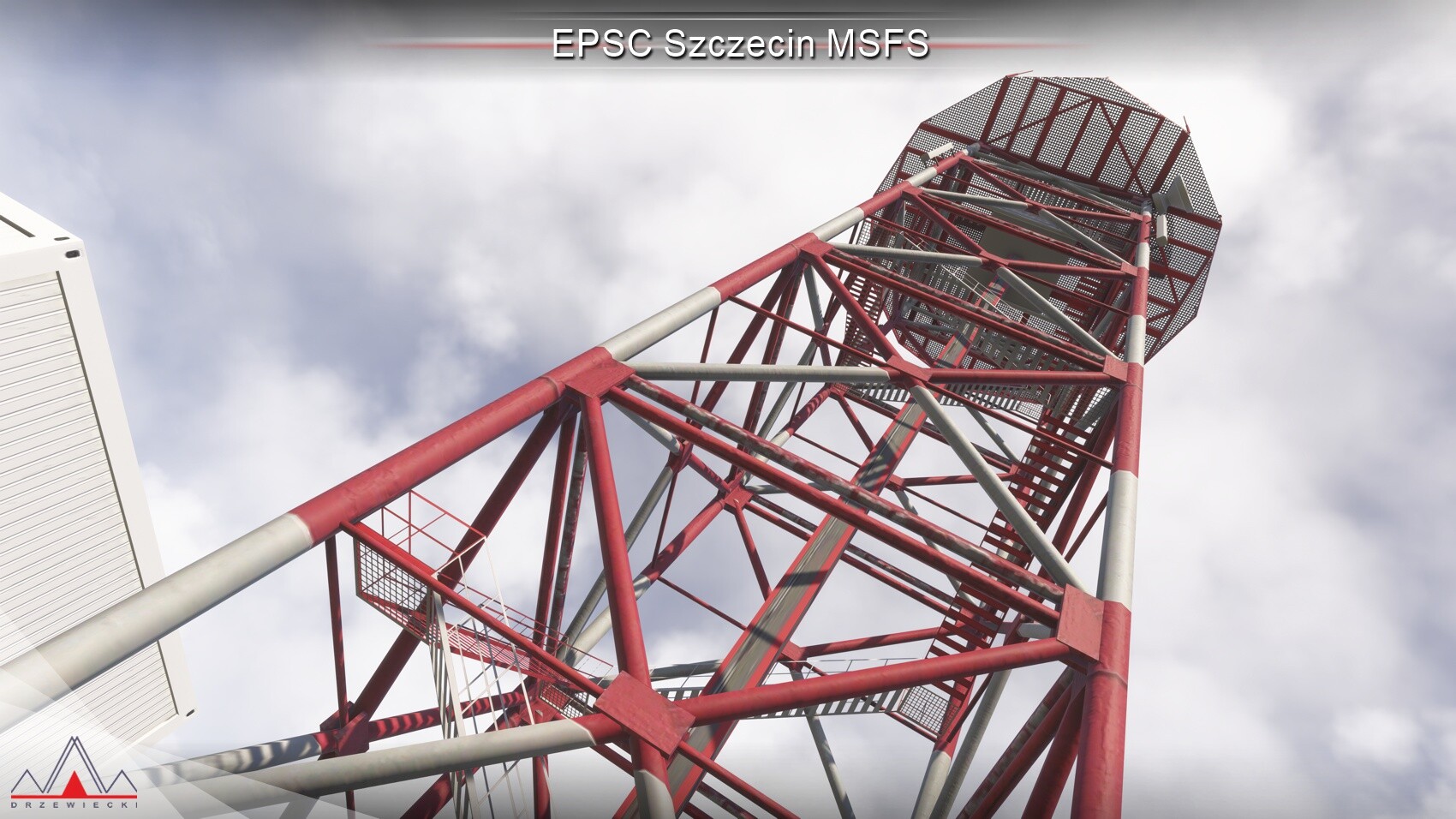
  • High-quality modelling and texturing - detailed terminals, tower, hangars, and structures with realistic materials and ground textures
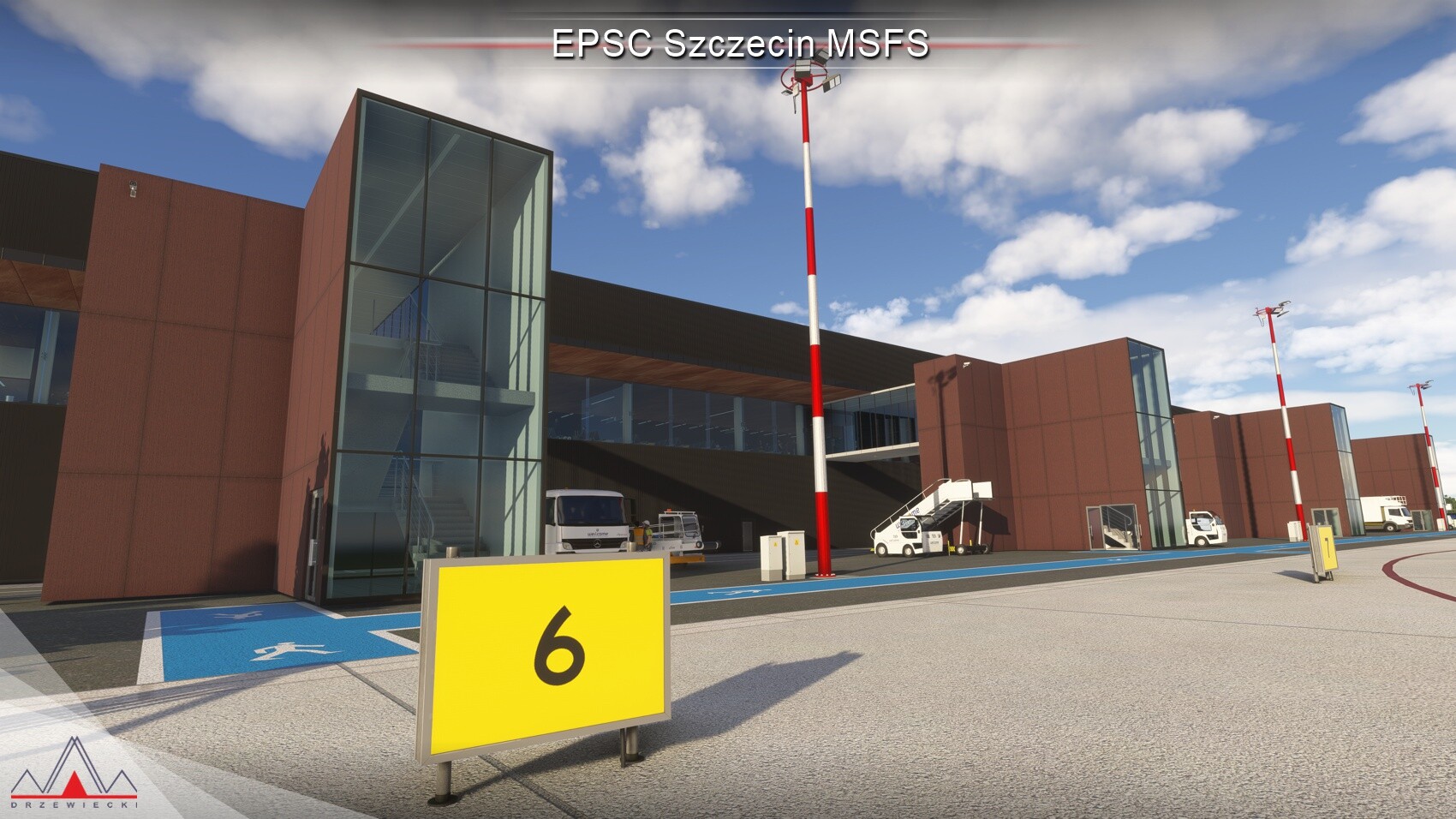
  • Detailed airside environment - accurate aprons, taxiways, markings, signage, and service areas based on reference data
  • Advanced lighting and navigation - custom runway, taxiway, and approach lighting with PAPI and navigation elements
  • Immersive atmosphere - custom vehicles, static aircraft, clutter, interiors, and bespoke assets
  • Performance-friendly design - optimized geometry, LODs, and textures for smooth operation
Purchase $25.12 AUD
Sales tax will be calculated at checkout where applicable.
US$17.22 | €15,02 | £13.03
This purchase will earn you 12 Orbs!


Screenshots


Developer

This product has been produced by Drzewiecki Design. For Drzewiecki Design product support, please go to https://drzewiecki-design.net/forum/index.php

View Drzewiecki Design on OrbxDirect


Compatibility

General

You will need Orbx Central to download and install this product. Orbx Central runs on Windows 7+, macOS and Linux. An internet connection is also required.

The download size of this product is 1.18 GB. It uses 2.43 GB when installed.

Supported Simulators

This product is compatible with the following simulators:

  • Microsoft Flight Simulator
  • Microsoft Flight Simulator 2024

Supported Operating Systems

This product is compatible with the following operating systems:

  • Windows